

Sara Tyler, General Manager at Black Squirrel Farms, spent her career working in the energy industry. She used her geoscience degrees to look for oil and gas before turning to work in renewable energy, including wind, solar, and energy storage.
“I've always been interested in how the world works… but what interested me most was learning about the changes that are happening on the landscape,” says Tyler. “There are two major human endeavors that impact the landscape, where we live, and how we live: one is energy, and one is agriculture. So when it was time for my work in energy to be over, getting involved in agriculture made sense.”
How to get involved in agriculture wasn’t clear. Buying some land in the Finger Lakes region of upstate New York, close to where she grew up in Rochester, NY, and starting her own small business seemed like a good idea. However, what that business would actually do or sell remained murky.
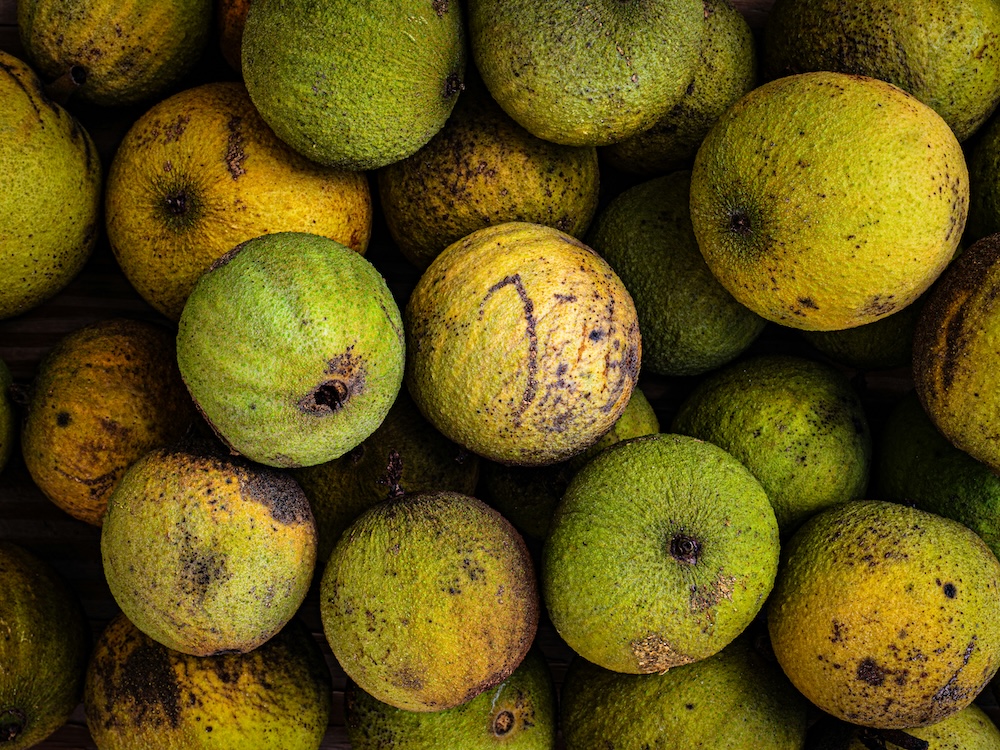
“My husband and I picked up the land before we had a concrete idea,” Tyler says. “And in 2018, we noticed that the black walnut trees on our land had produced so many walnuts that you could hardly walk without falling down, and I thought: here’s a huge resource that's just absolutely going to waste.”
Turning waste into resources
Much of Tyler’s work in the energy industry was related to “resource quantification” – measuring and assigning numerical values to energy resources, whether the energy resource was hydrocarbons, wind energy, solar energy, or even energy demand flexibility. Instead of seeing the walnuts on her property as yard waste, Tyler saw an untapped resource and opportunity.
“I thought, ‘Well, I happen to be in a position where I can take action on this. Black walnuts are a well-defined problem. The problem fits very neatly in a box. There's no deadline to get it solved, there's no one else in the area doing it, so… alright, let's see what we can do,'” she says.
It was clear that the trees on Tyler’s property wouldn’t be enough to support even a small business: black walnut processing would only make sense if she could also use walnuts from many of the trees growing in the area that belonged to other people.
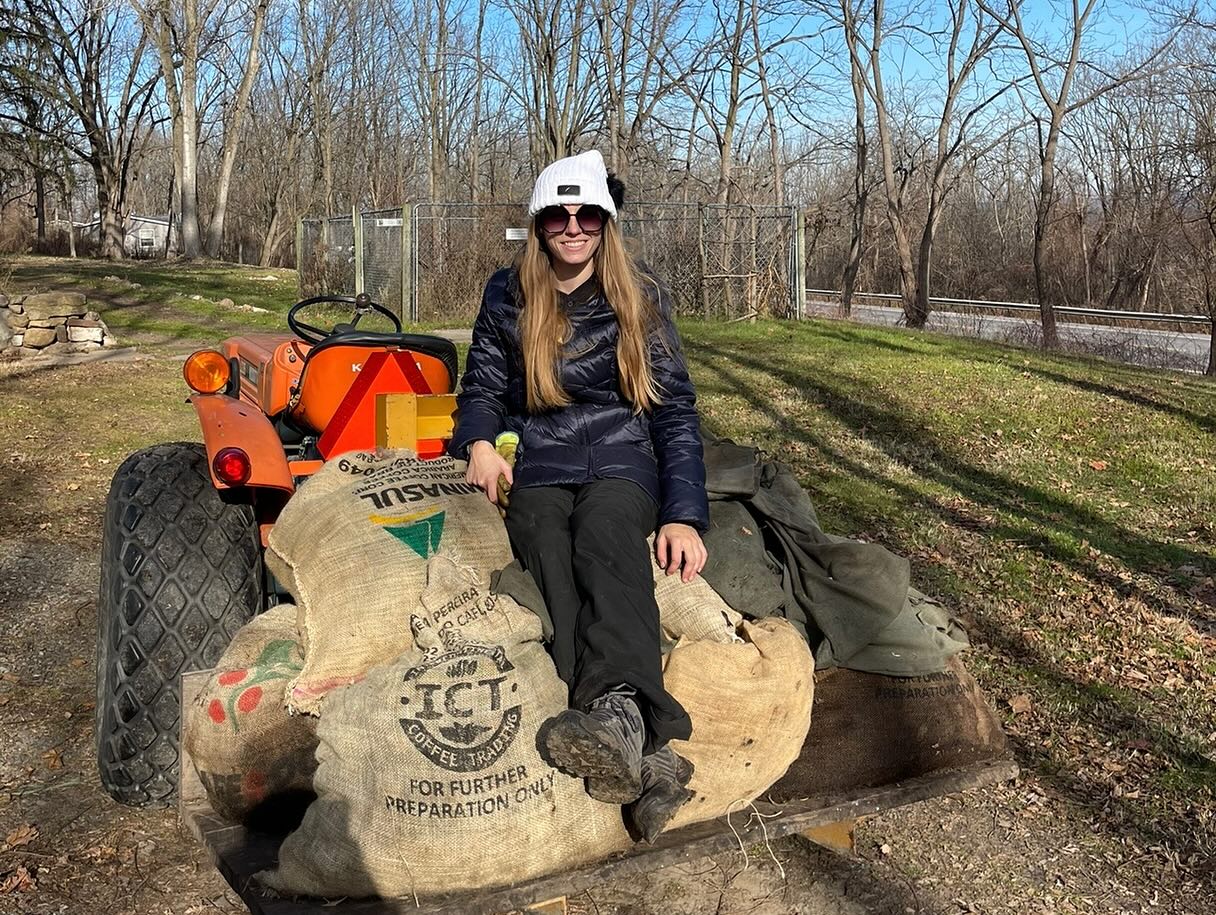
“It goes back to my background doing resource assessment for the energy industry,” Tyler says. “We weren't working with our own resources as a company, we were leasing somebody's rights to their oil and gas. We were mapping the wind energy over an entire state and then trying to figure out which landowner we would work with to capture some of that resource. And I look at walnuts similarly. There are a lot of people with trees. The trees are their trees. They're going to decide what to do with those trees. So the question I had was: would people care enough about keeping their black walnuts from going to waste to collect them and bring them to our place?”
To find out, Tyler posted an ad on Facebook offering ten cents a pound to anyone who wanted to drop off black walnuts. Ten people showed up with enough black walnuts for Tyler to have proof of concept – some people came because they saw the black walnuts on their property as a nuisance and just wanted to get rid of them. Others came because they liked being a part of Tyler’s program and wanted to see the end result.
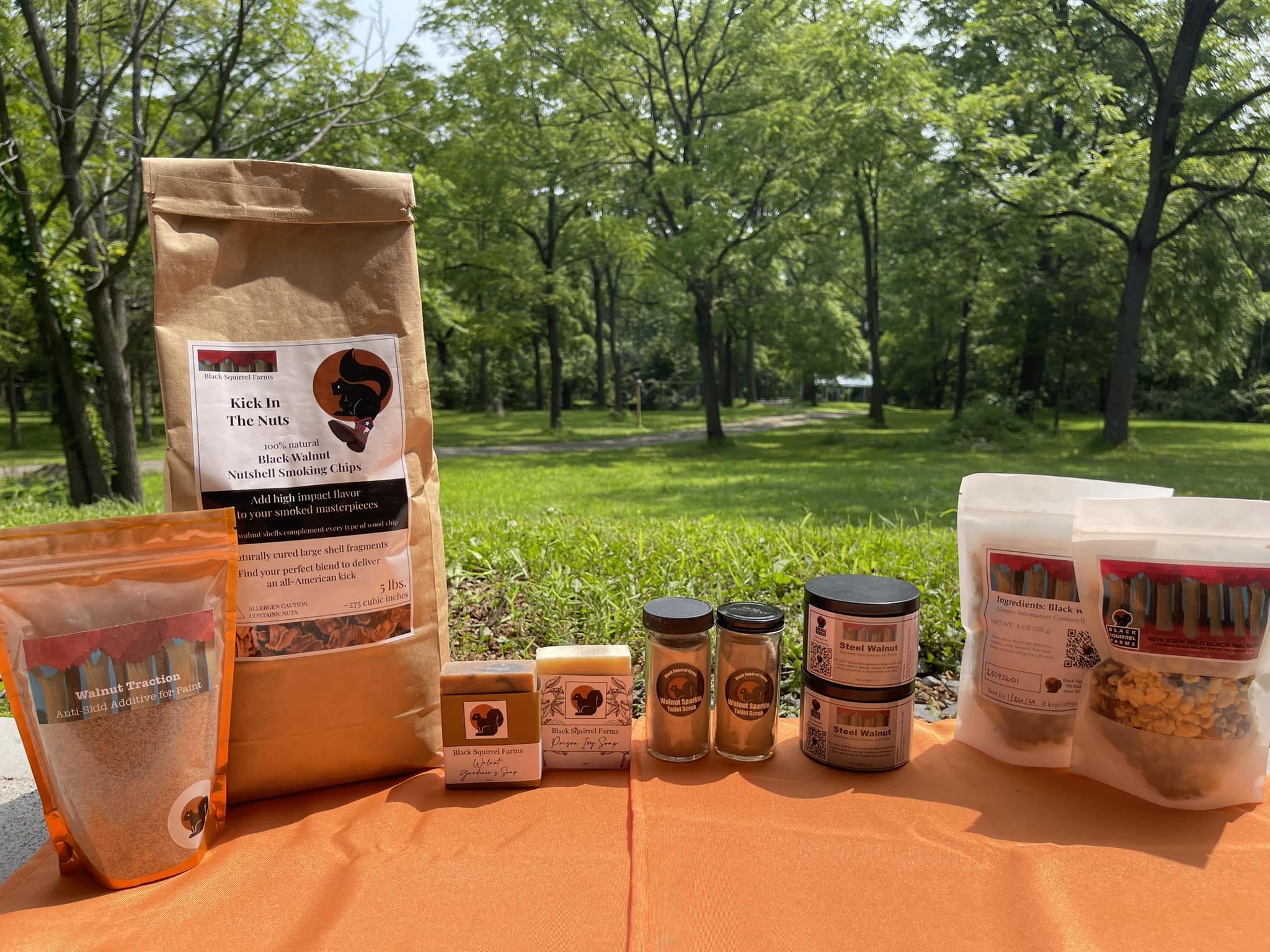
Tyler continued to gather black walnuts from neighbors and, after a couple of years, built a building, got a food manufacturing license from New York State, and then Black Squirrel Farms could officially sell black walnuts to anyone in the US.
Keeping track of the Black Squirrel Farms community
Joining the program to drop off black walnuts at Black Squirrel Farms requires filling out a NationBuilder survey. However, Tyler believes that the community is broader than that. While the current collection program is clearly defined, how to broaden that program is an open question.
“The program isn’t currently designed to serve people who can’t gather and transport their walnuts, or people who are happy to gather someone else’s walnuts, or people who grow so many walnuts that transport by pickup truck doesn’t make sense,” Tyler explains. “These people are certainly all part of the community. So are people who buy black walnuts. So are people who open doors for the business to grow.”
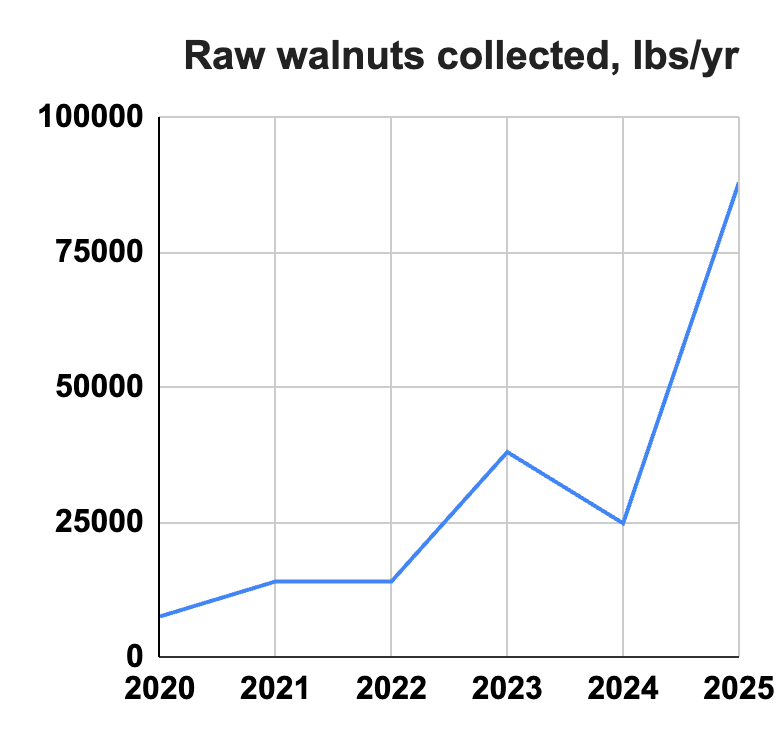
And the business is growing. In 2025, Black Squirrel Farms received ten times the number of walnuts that were received in 2020. How does she keep track of it all? Having one place to run her website, send community emails, handle basic accounting, and keep track of her network of community members is critical for Tyler. She first started using NationBuilder when she helped a friend run as a third-party candidate for the U.S. Senate in Texas in 2018. He didn’t win, but Tyler walked away with an understanding of what the NationBuilder platform had to offer, even for a small business like Black Squirrel Farms.
She still pays 10 cents per pound for raw black walnuts contributed but now also offers the option of a gift certificate to the Black Squirrel Farms store worth 12.5 cents per pound. And every person who drops off black walnuts or purchases items is catalogued in her NationBuilder database. Instead of custom fields, she uses the “Address 2” field to track the weight of walnuts each person delivers because this lets her send personalized thank you emails with their payment amounts at the end of each season.
“Why would I use software that’s intended to organize a community for a political goal for an agricultural goal? Because it’s the community that's actually doing it,” Tyler explains. “At Black Squirrel Farms, the people bringing us walnuts are not people who are related to our business in a traditional employee-employer relationship. These are people who are making independent choices. So in many ways, what we’re doing is more analogous to a political campaign, seeking community support for our area’s black walnuts.”
A people-centric approach to conservation
For Tyler, processing black walnuts isn’t just about processing black walnuts. It’s about conserving the black walnut trees themselves.
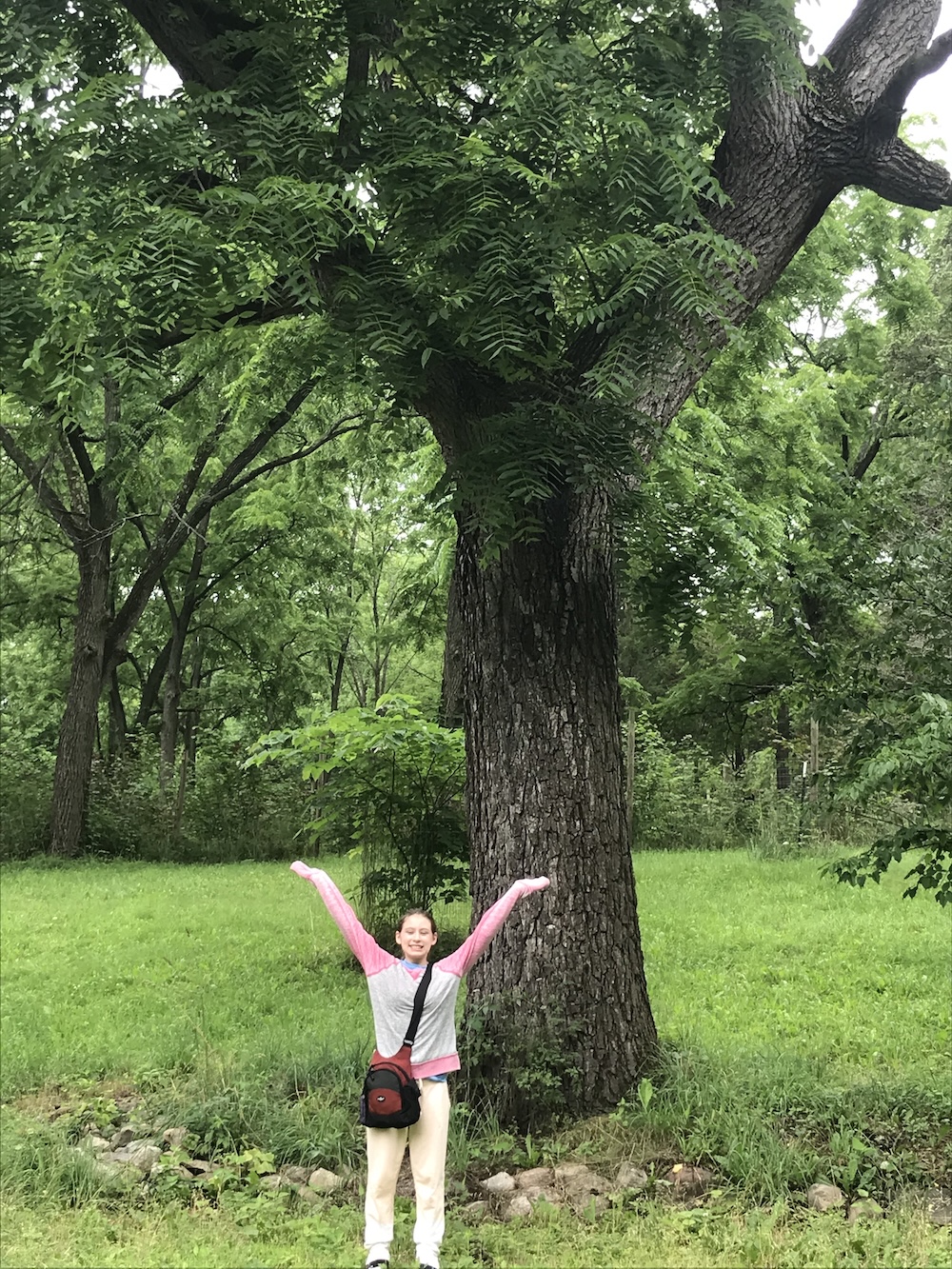
“Right now, if you've got a black walnut tree and its value to somebody is zero, there's a pretty good chance that they're going to eventually cut it down. They have no connection to it. They may actively dislike it. But, if the person who owns that tree brings us nuts every year and they get a check [payment] or some walnuts, they know that their tree is useful and they are more likely to take care of that tree and to keep it standing. Nobody is pro-waste. Nobody really approves of wasting resources. We’ve found lots of black walnut trees more than 200 years old, so those trees were growing before our county was founded in 1823. We ought to try to keep those trees standing,” Tyler says.
“Working with the community, we've seen people actually change their minds about their trees. This is a fundamentally different approach to conservation than setting aside a piece of land to serve as untouched wilderness, but it’s still conservation… the objective is the same, but the approach is people-centric and impacts that landscape where people live.”
For Tyler, this is ultimately about circularity and sustainability. “There are a lot of people doing amazing things to become more self-sufficient on their own land. However, long-term, we’re going to need to figure out how to make that work on a more regional scale. Finding non-timber value in native nut trees is just somewhere to start.”
To learn more about Black Squirrel Farms, visit blacksquirrelfarms.net.