
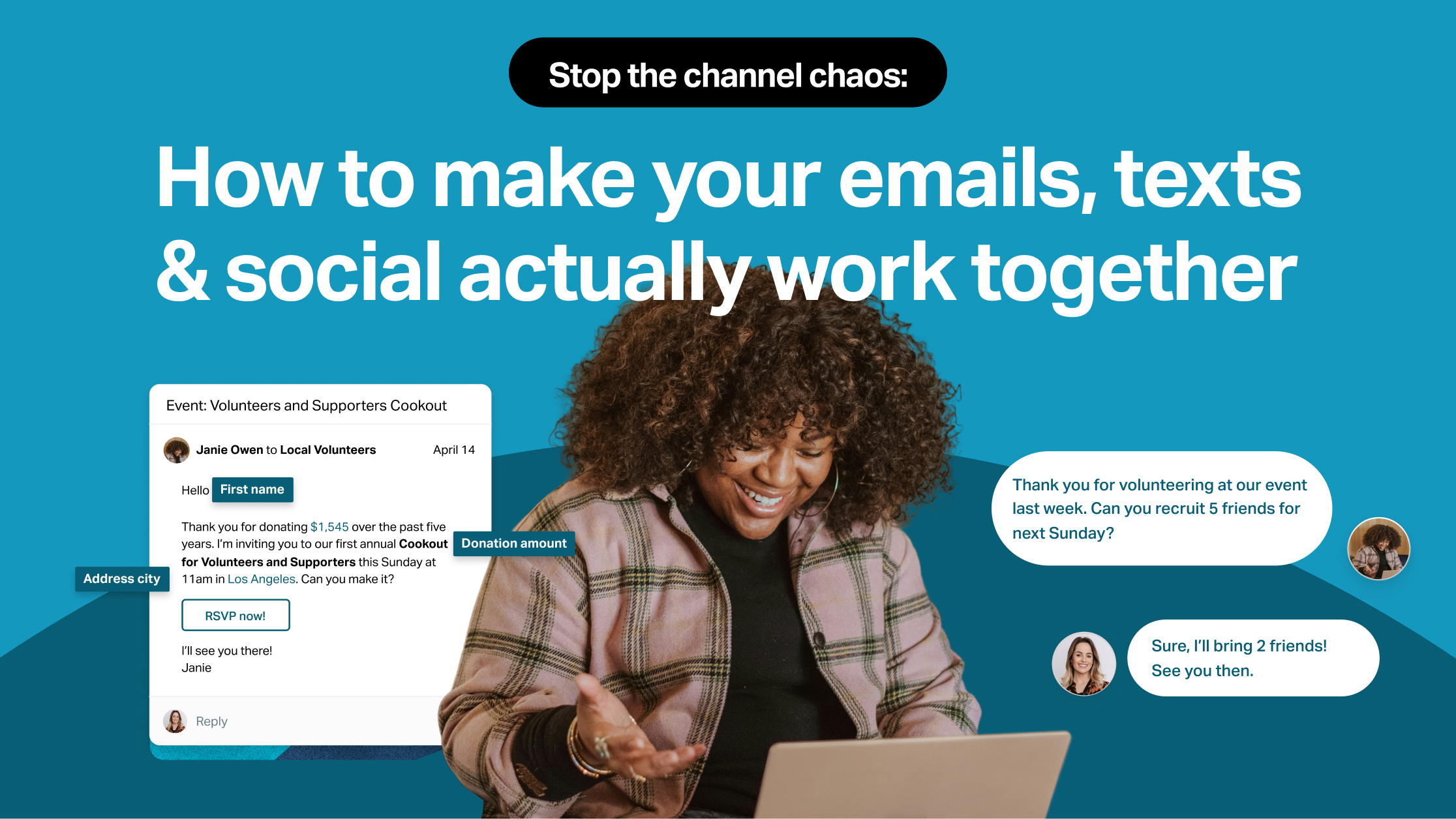
Picture this: you just signed up to learn more about a nonprofit’s work. Within a week, your phone is pinging nonstop. A petition in your inbox, donation asks via text, event invites on social media, and another fundraising email before you’ve even caught your breath. Instead of feeling inspired, you feel... overwhelmed.
This is the reality for too many supporters today. Organizations don’t try to create chaos. But it can simply happen when using multiple channels without a cohesive strategy. In a recent webinar, Sarah and I broke down how to turn channel chaos into coordinated campaigns that move supporters up the ladder of engagement.
The solution is a four-step framework that transforms scattered touchpoints into a connected supporter journey.
Why multi-channel coordination matters (not just multi-channel presence)
Having email, text messaging, social media, and events isn’t enough. What really matters is if they’re reinforcing each other or competing for attention.
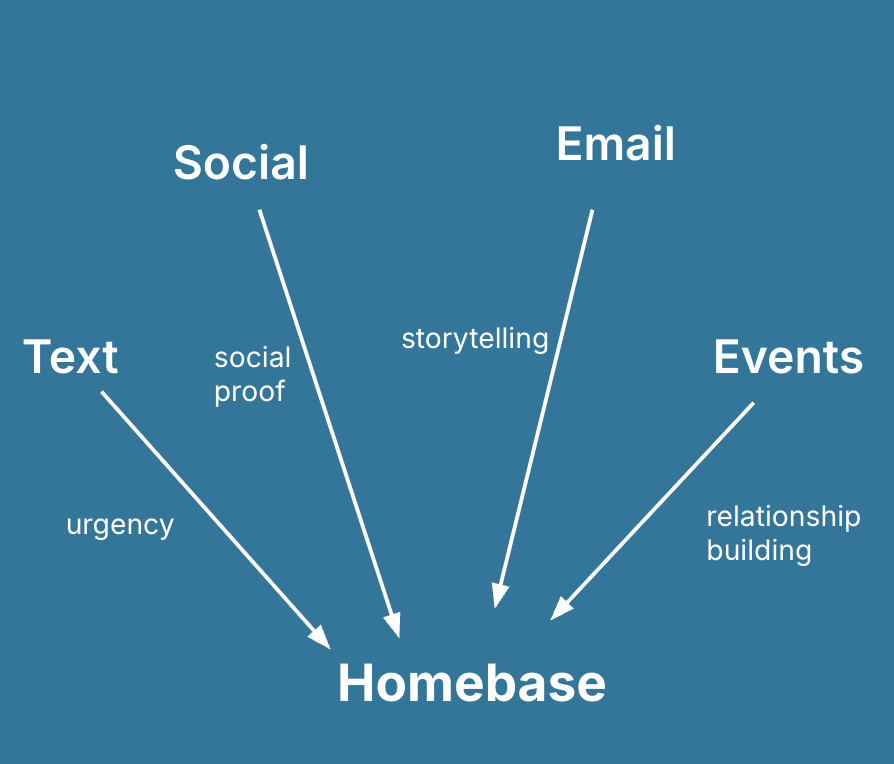
Each channel has its own strength. Your website is the home base where actions happen. Email tells stories. Text messaging cuts through noise with urgency. Social media amplifies reach. Events build lasting relationships. And your supporters become your most credible advocates, because people trust their peers more than your ads.
If these channels operate independently, different teams send messages on different timelines with different tones, then nothing builds on what came before.
Why does coordination fall apart? Usually for three reasons:
-
Your tools don’t talk to each other.
-
You’re using one-size-fits-all messaging.
-
You lack visibility into your supporter journeys.
NationBuilder’s integrated platform solves this by centering everything around your supporter database. When someone takes action anywhere, you see it everywhere. This lets you focus on strategy instead of wrestling with disconnected systems.
The 4-step framework for multi-channel coordination
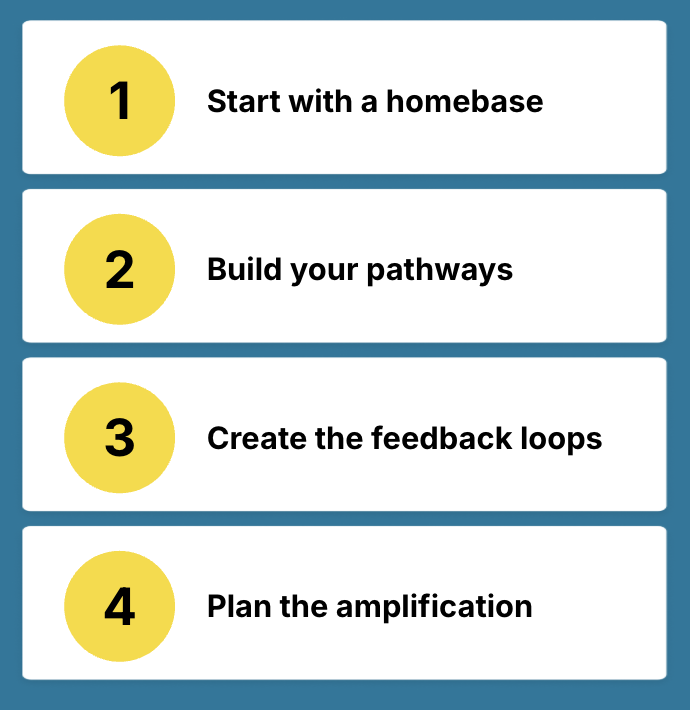
Step 1: Start with your home base
Every effective campaign needs one clear destination where you’re driving people to take action, whether that’s an ActionButton for contacting lawmakers, a donation page, or a volunteer signup form. Every channel should point there.
But don’t give everyone the same experience. Design for multiple engagement levels. Your main call to action should be front and center, but offer secondary, lower-commitment actions for people who aren’t ready for your biggest ask. Someone visiting for the first time might not donate $100, but they might sign a petition.
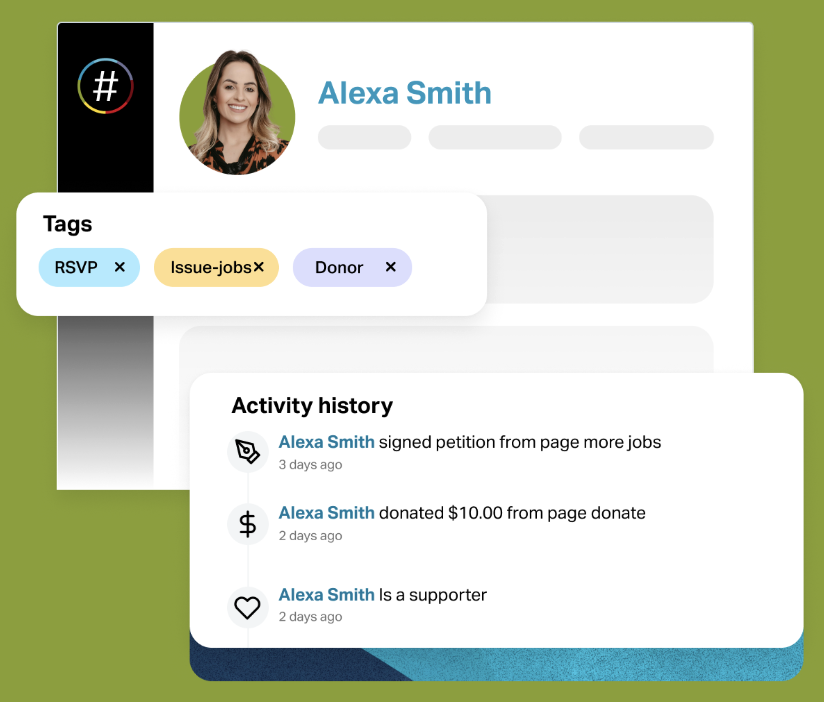
Build in smart engagement tracking. Every action should tag supporters and update records so you learn who’s most engaged and what they care about.
Show different content to different people. If someone is already a recurring donor, show them volunteer opportunities instead of another donation ask. If they just signed a petition about jobs, surface related content. The same page can deliver different experiences based on what you know.
Step 2: Build strategic pathways to your home base
Each channel should play to its strengths while reinforcing the others.
Example: Volunteer recruitment
Your home base is a volunteer signup page. Here’s how a coordinated approach looks:
-
Day 1: Email sharing why volunteers are essential, with impact stories leading to your signup page.
-
One week later: Text reminder about the upcoming event, linking to that same signup page.
-
Throughout: Social media posts showing volunteers having fun and making an impact, offering proof your asks are legitimate.
- At the event: Staff make direct asks for the next opportunity, completing the loop.
Each channel plays a different role: storytelling, urgency, social proof, and relationship building. Together, they work toward the same goal.
Step 3: Create feedback loops that respond to action
This is where many organizations stop, and where real transformation begins.
Segment by engagement and interest. When someone signs a petition about jobs, tag them accordingly. People who take one action are much more likely to take another. Your role is to guide that momentum.
Example: Smart sequence for a petition signer
-
Immediate thank-you email.
-
A few days later, an educational message with deeper context.
- On day three, a new ask, such as calling a representative or sharing with friends.
Target non-signers differently, perhaps by sharing a personal story or changing the angle.
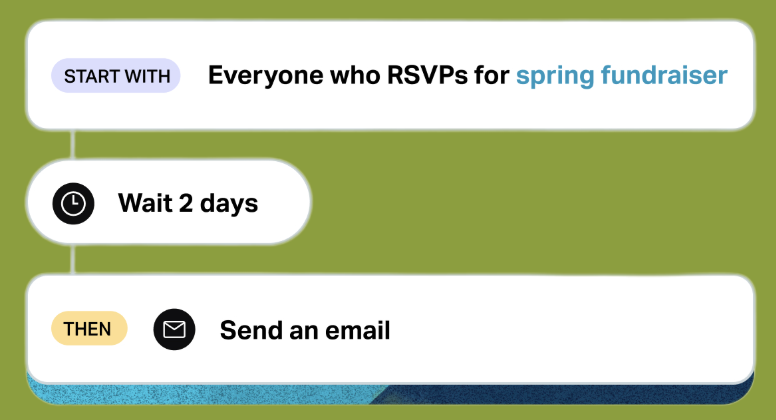
Automate follow-ups. When someone RSVPs for an event, send a confirmation email right away, a text reminder the day before, and a post-event email inviting them to the next opportunity.
Tailor messaging by stage of engagement.
-
First-time subscribers need inspiring language about joining a movement.
-
One-time donors need nurture content about becoming recurring supporters.
- Recurring donors deserve celebration and leadership invitations.
Same goal, different experiences. Every person should feel you’re speaking directly to them.
Step 4: Plan for amplification through your supporters
Transform supporters into champions who carry your message through their own networks.
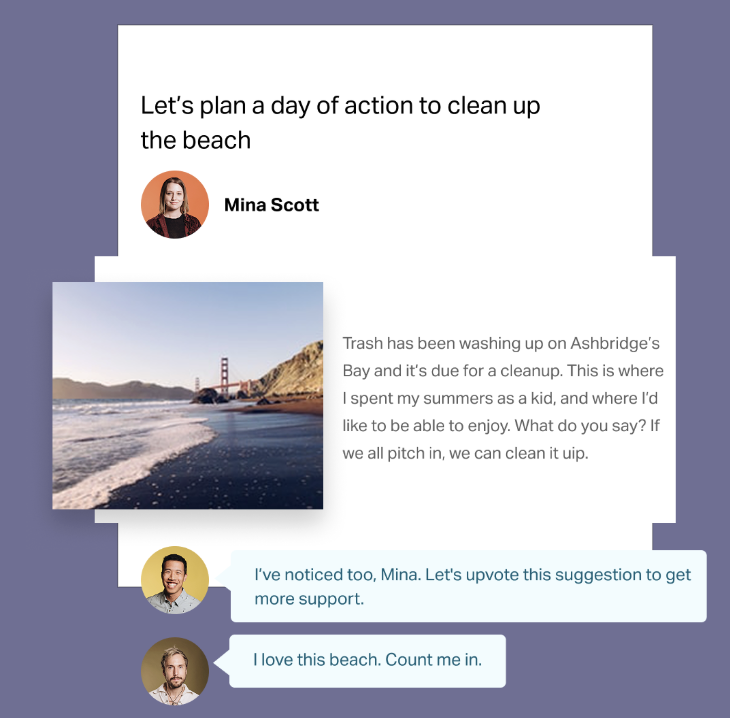
Scale through peer-to-peer networks. People trust people. Encourage supporters to share actions on social media, invite friends to events, and tell their own stories.
Identify and empower your super-supporters. Roughly 5% of your community drives 100% of your organic growth. Find them, thank them, and give them ownership. Let them lead volunteer teams, host events, or create personalized fundraising pages to share.
Real-world success stories
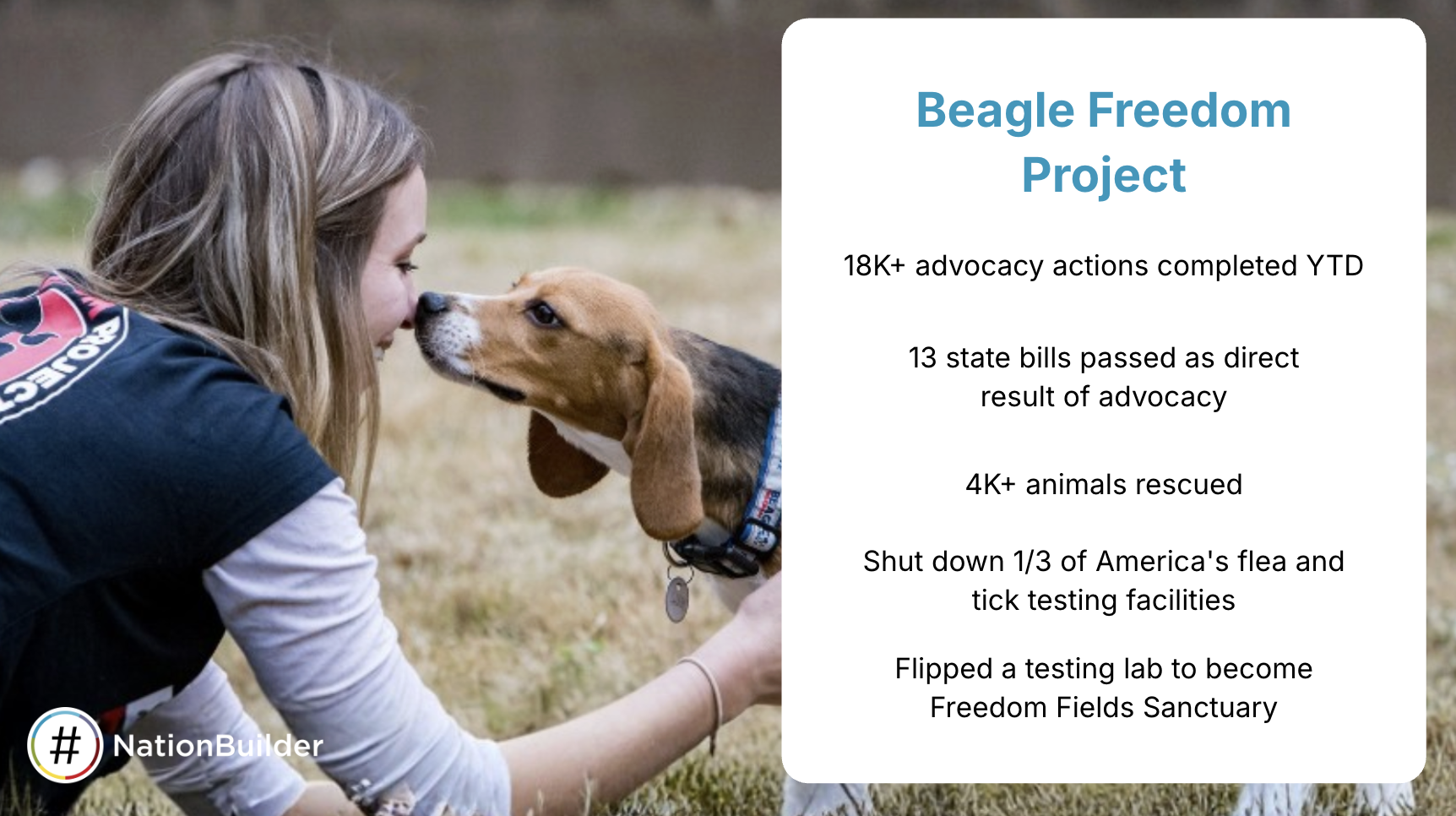
Beagle Freedom Project faced a massive challenge: passing reform legislation across multiple states while mobilizing thousands of supporters.
They launched ActionButton petitions for each state, used email, social, texts, and events to guide supporters, automated thank-yous and call scripts, and empowered volunteers to share content locally.
The results? Tens of thousands mobilized. Thirteen state bills passed. Over 4,000 animals rescued. One-third of testing labs shut down, and one converted into an animal rescue sanctuary.
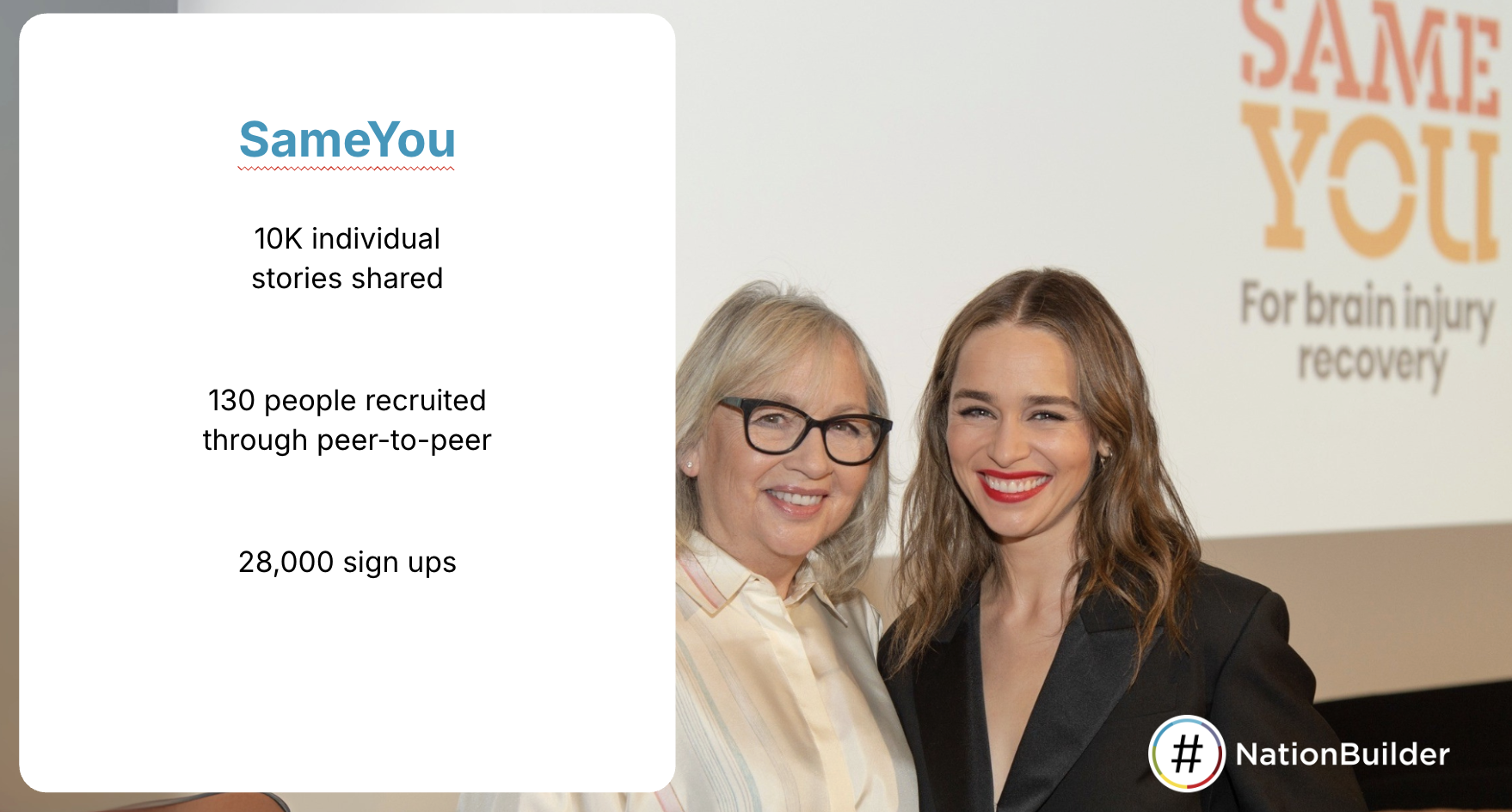
SameYou, founded by Emilia Clarke, began with her personal story as the campaign’s home base. That story became the foundation for community signups, with 28,000 and counting.
When survivors shared their own experiences, SameYou provided ambassador pages and blog features—personal home bases they could share. Over 130 people became active recruiters, driving growth across volunteers, events, and donors.
How to start coordinating your channels today
-
Audit your current state. Are your channels reinforcing each other or competing?
-
Pick one campaign to test the framework. Map all four steps before launch.
-
Start with automations. Create triggered sequences like thank-yous, welcomes, and reminders.
- Build feedback loops before expanding. Master coordination with existing tools before adding more.
The tools are ready. Your supporters are waiting. Make every interaction count.
Resources
🌐 NationBuilder website builder and page types
🎯 ActionButton overview and advocacy tools
🫂 SameYou grows a global community of support for brain injury survivors
Ready to take the next step? Explore NationBuilder’s tools for coordinated multi-channel campaigns or start your 14-day free trial.
